
The Beginners Guide to Art Meditation
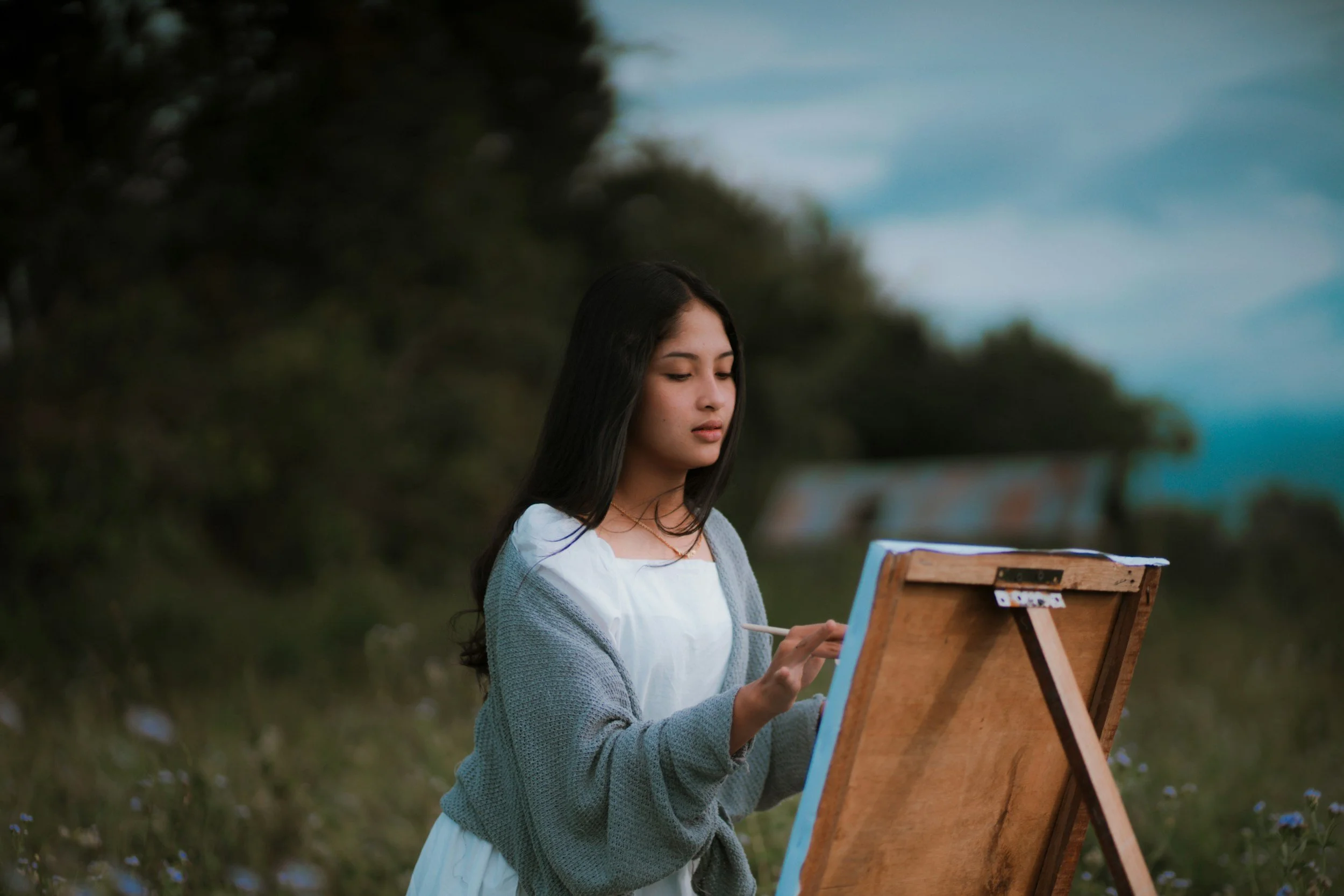
Art Meditation: A Different Way to Quiet the Mind
When most people think of meditation, they picture someone sitting cross-legged in complete silence, eyes closed, focusing on their breath.
For many, that image feels calming. For others, it feels impossible.
Not everyone finds stillness by sitting still.
Some people find it by picking up a paintbrush.
Others discover it through drawing, colouring, sculpting, collage, or simply allowing their hands to move freely across a page. This is the essence of art meditation—a mindful creative practice that invites us to become fully present through the process of making, rather than through words or thoughts.
Meditation Isn't About Emptying the Mind
One of the biggest misconceptions about meditation is that we are supposed to stop thinking.
In reality, meditation isn't about having no thoughts. It's about noticing them without becoming caught up in them. It's about gently bringing our attention back to the present moment, again and again.
Art meditation works in exactly the same way.
As we focus on the movement of the pencil, the blending of colours, the feel of clay between our fingers or the repetitive patterns emerging on the page, our attention naturally shifts away from the constant chatter of the mind and into the experience of creating.
Without even realising it, we begin to breathe a little slower.
Our shoulders soften.
Our nervous system starts to settle.
The Creative Process Becomes the Meditation
Unlike creating art with the intention of producing something beautiful, art meditation is about the experience rather than the outcome.
There is no pressure to get it right.
No expectation of perfection.
No need for artistic ability.
The artwork simply becomes a reflection of the present moment.
Every brushstroke, every line and every colour becomes an anchor, gently bringing us back whenever the mind begins to wander. Just as someone meditating may return their attention to their breath, we return our attention to the creative process.
The art isn't the goal.
Presence is.
A Conversation Without Words
Many of us spend our days analysing, planning and solving problems. Our thinking minds rarely get a chance to rest.
Art meditation offers another language.
Instead of asking, "What am I thinking?" it quietly asks, "What am I noticing?"
Perhaps it's the calming rhythm of repetitive marks.
The warmth of a colour.
The texture of paper beneath your fingertips.
The sound of charcoal moving across a page.
The sensation of paint gliding effortlessly across a canvas.
These simple sensory experiences gently draw us into the present, creating space for the mind to slow down and the body to relax.
Listening to Your Nervous System
When we become absorbed in a creative activity, our nervous system often begins to shift from a state of alertness into one of calm and safety.
There is no pressure to explain ourselves.
No need to search for the right words.
The focus isn't on analysing our emotions but on giving ourselves permission to simply be with them.
Sometimes what emerges is joy.
Sometimes sadness.
Sometimes nothing at all.
And that's okay.
Art meditation isn't about making something happen. It's about creating the conditions where whatever needs to arise can do so naturally, without judgement.
You Don't Have to Be an Artist
Perhaps the most beautiful thing about art meditation is that absolutely anyone can do it.
You don't need artistic talent.
You don't need expensive materials.
You don't even need to know what you're going to create.
A blank sheet of paper, a pencil and ten quiet minutes are enough.
The value isn't found in the finished picture.
It's found in the moments you spent being completely present while creating it.
Coming Home to Yourself
In a world that constantly asks us to do more, think more and achieve more, art meditation offers something wonderfully different.
It invites us to slow down.
To breathe.
To notice.
To create without judgement.
Because sometimes the greatest masterpiece isn't the picture you make.
It's the feeling of peace you discover while making it.
